
Carrot Bliss Balls - Energy Bites For Kids


These carrot cake bliss balls are made with fresh carrot, oats, sunflower seeds and a handful of dates, so they're nut-free for school lunchboxes and lower in sugar than most bliss balls.
Everything gets blitzed in the food processor, and rolling them is a great job for little hands (expect sticky fingers).
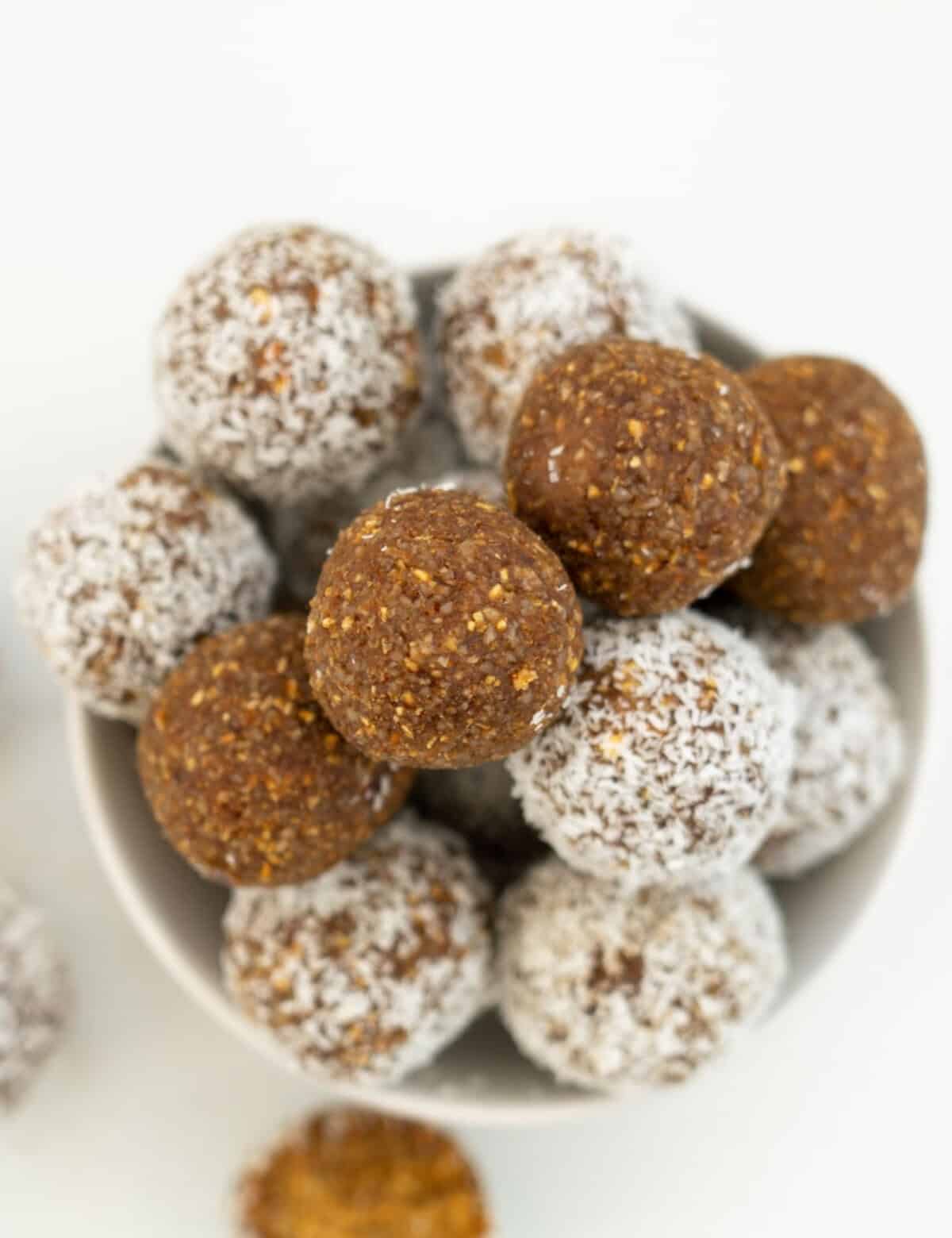
Why These Bliss Balls Are Great For Kids
- Nut-free: Sunflower seeds replace the cashews or walnuts most bliss balls use, so they can go to schools and daycares with nut-free rules.
- Lower in sugar: Carrot and oats bulk them out, so there are fewer dates than in most bliss balls — about 2 g of sugar per ball.
- No baking: One food processor and about 12 minutes, plus time in the fridge.
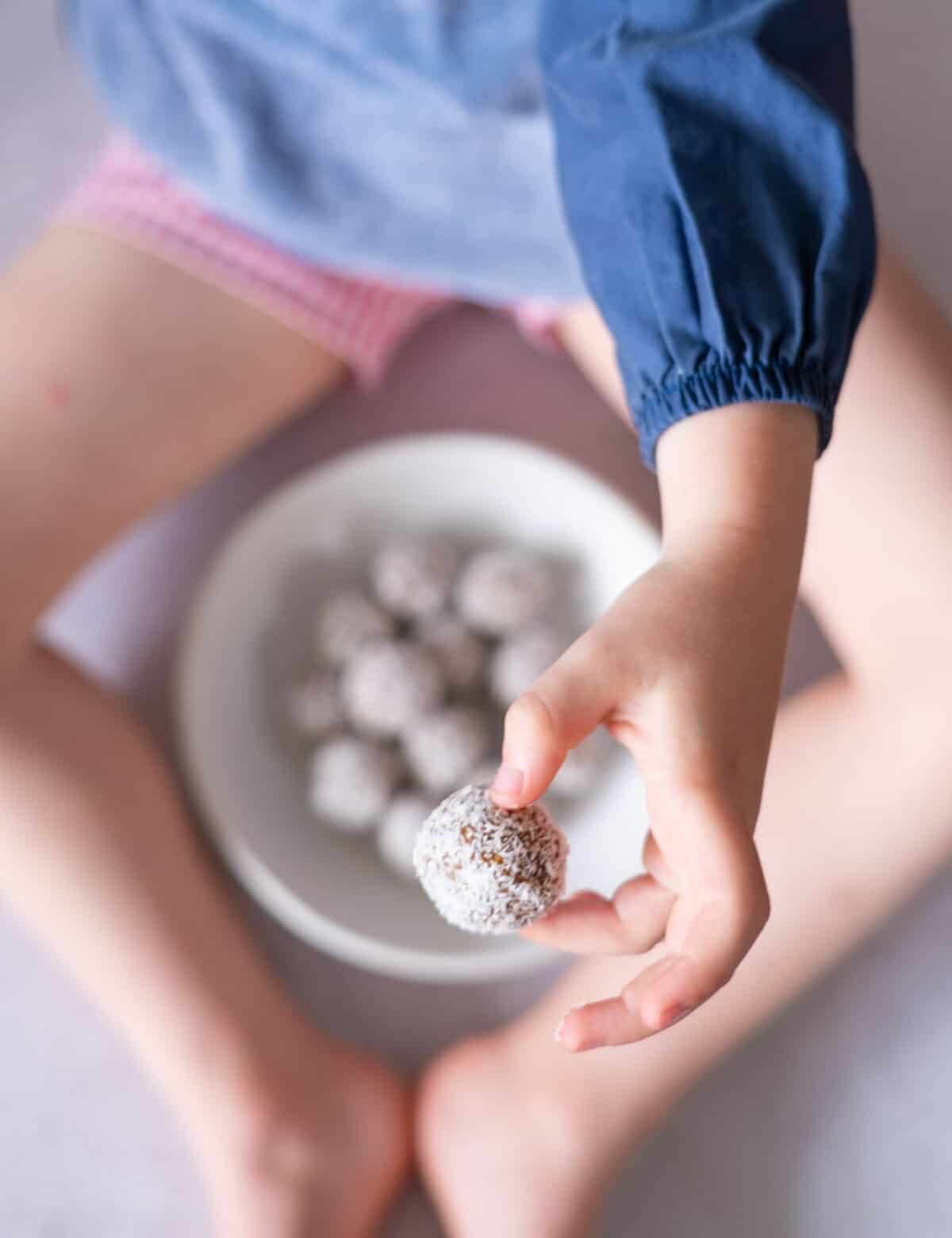
- Kids can help: Rolling the balls and coating them in coconut is the fun (and messy) bit.
- Makes a big batch: About 30 balls, and they freeze well.
Ingredients You Will Need
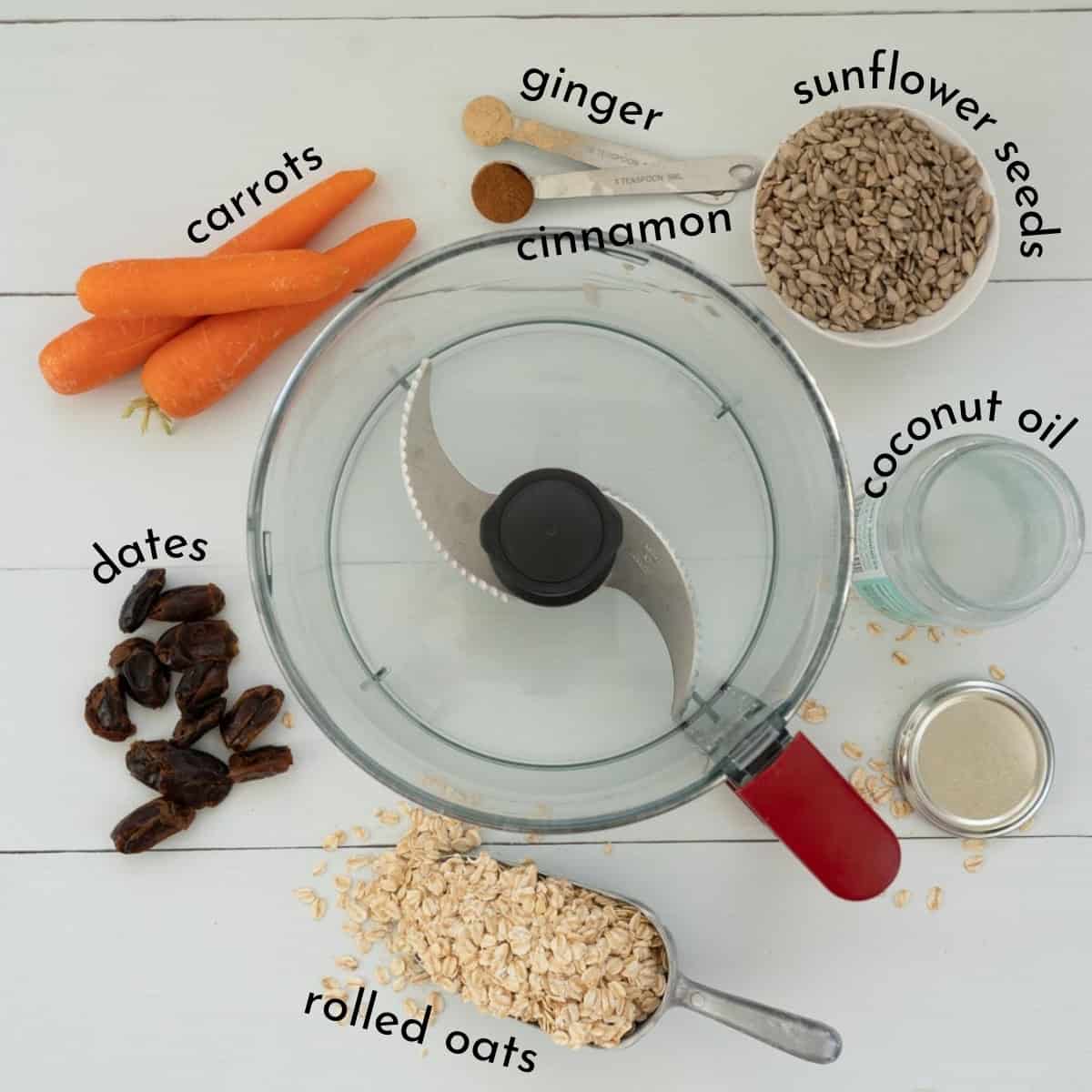
Ingredient Notes, Substitutes, & Allergy Swaps
- Carrots: To be carrot bliss balls you will need carrots! You can substitute the carrots for soft baked pumpkin or baked sweet potato.
- Dates: Use Medjool or regular (Deglet Noor). They're pretty similar nutritionally, but Medjool are softer and juicier, and pricey here in New Zealand, so I usually use regular dates. Regular dates are much firmer, so if your food processor isn't very sturdy, soak them in hot water for 10 minutes and drain before adding. You can also substitute the dates for raisins or sultanas.
- Sunflower seeds: Sunflower seeds are economical and a nut free option for making bliss balls, alternative options are pumpkin seeds (although they can give a different colour to the final product) or your favourite nuts; cashews, almonds etc.
- Rolled oats: Rolled oats can be substituted for quinoa or rice flakes.
- Coconut oil: As coconut oil hardens when cooled it is the perfect oil for helping bliss balls hold together.
- Gluten: These are wheat-free but not gluten-free, because they contain oats. In New Zealand, oats can't be labelled gluten-free, so for coeliac families, swap the oats for quinoa flakes.
Energy Balls For Kids
My blog is generally inspired by recipes that are suitable for kids. I get asked quite often about my thoughts on energy balls and bliss balls for kids.
I see bliss balls and energy bites everywhere, packed into lunchboxes, all over Instagram and Pinterest and now on my local supermarket's shelves.
For me, although very yummy, many energy balls and bliss balls are still packed with sugar in the form of dried fruits.
Don’t get me wrong I am not saying they are all bad, or that my kids don’t sometimes snack on energy balls and dried fruits. I am just saying that sometimes they are really high sugar items masquerading as low sugar.
Just because a bliss ball for kids has no ‘added sugar’ or 'refined sugar-free' it does not mean that the ingredients don’t contain naturally-occurring sugars. Dried fruit is quite a concentrated source of sugar and sticky too, so while my kids eat them, I am mindful about how much from both a sugar perspective and dental health perspective.
Illustrated Guide - How to Make Carrot Cake Bliss Balls
Below are illustrated step-by-step instructions to make my carrot energy bite recipe, if you prefer just the written instructions then head straight to the printable recipe card below.
Step one: Gather your ingredients, consider soaking your dates if they are very hard. I like to peel my carrots.
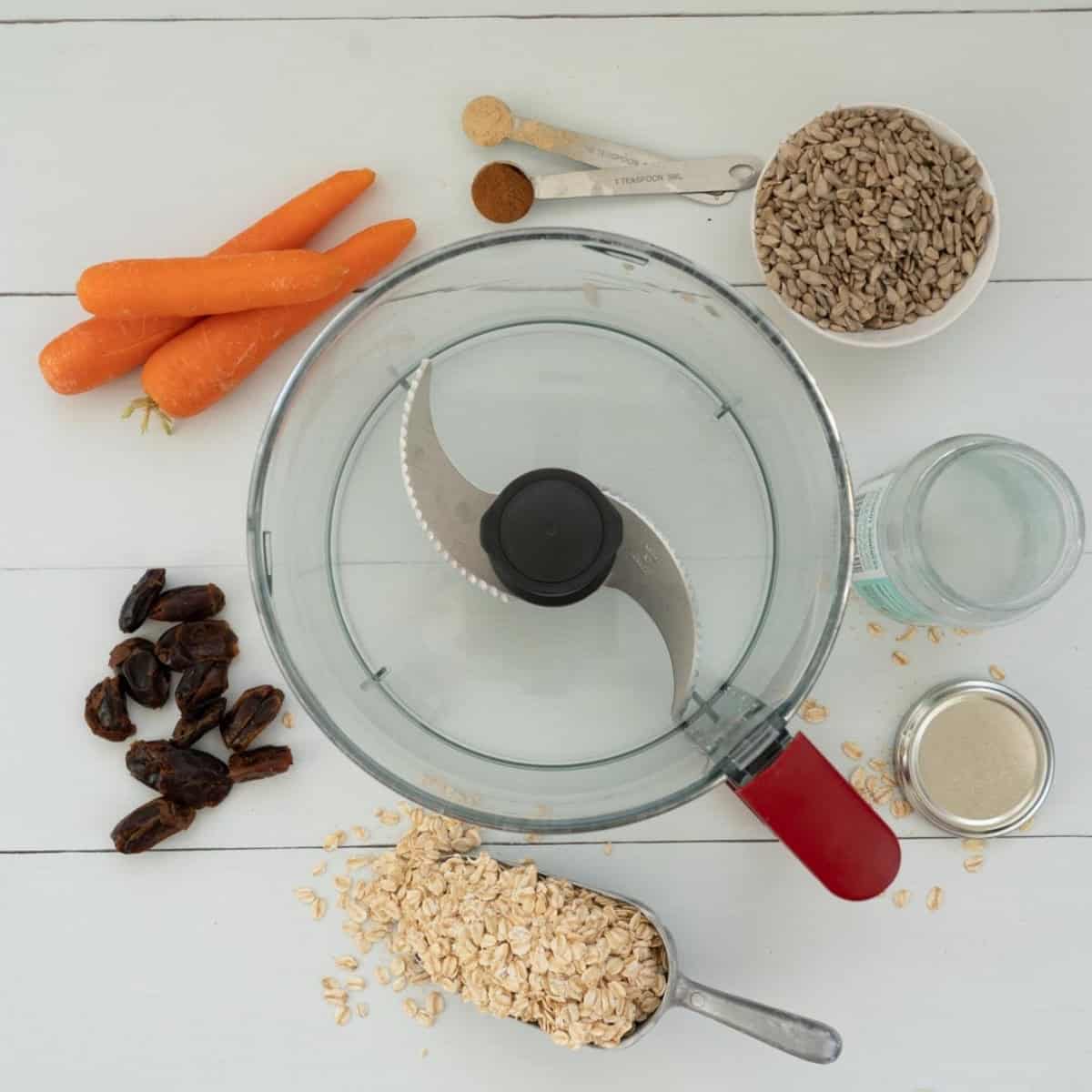
Step two: Put the carrots in the food processor on their own and blitz until very finely chopped. You want it to look almost like finely grated carrot, with no big chunks left.
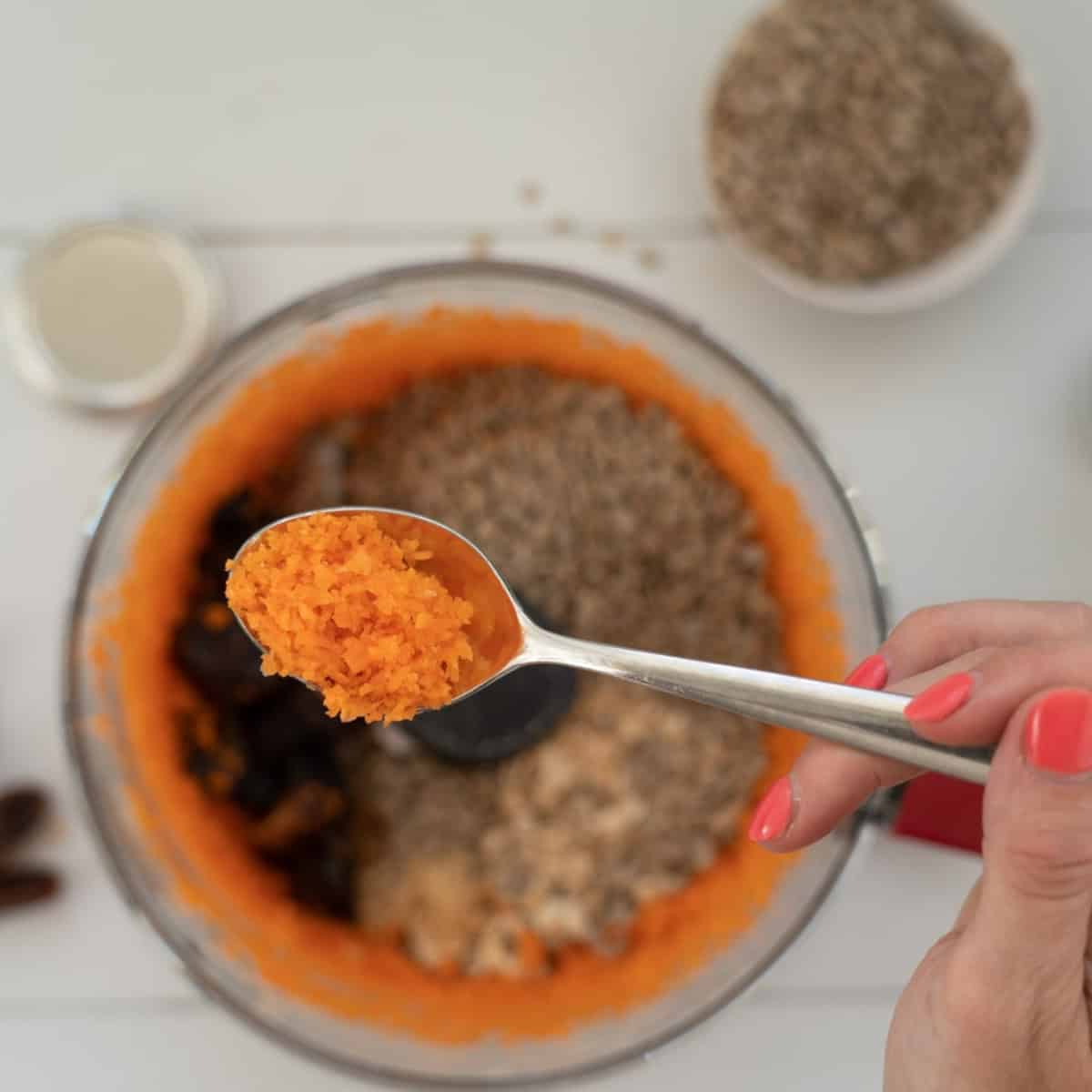
Step three: Add everything else except the coconut. This takes a while, around 5 minutes. The mixture will look crumbly at first, then sticky, then it will clump into one big ball around the blade. Stop and scrape down the sides once or twice, and be patient - it will get there.
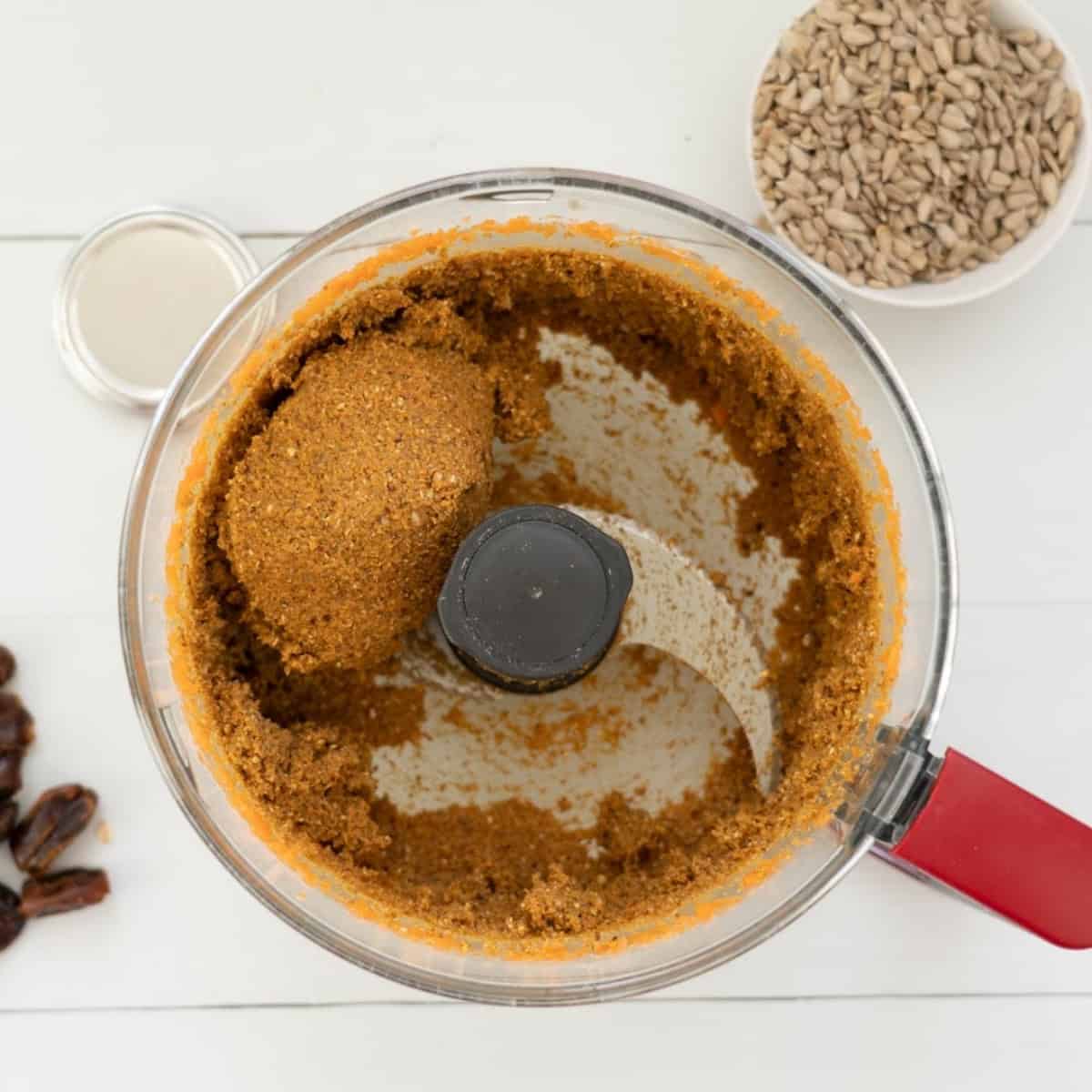
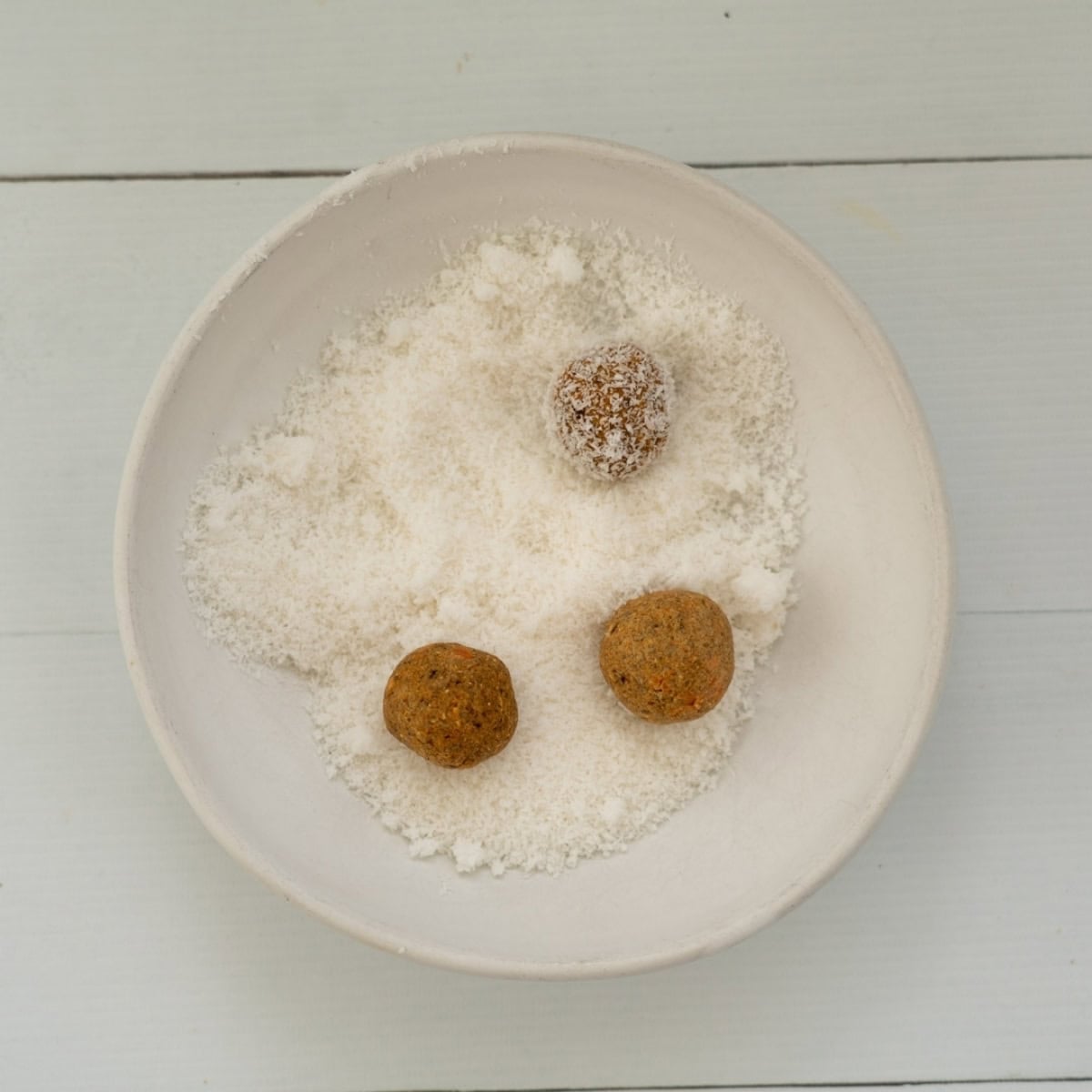
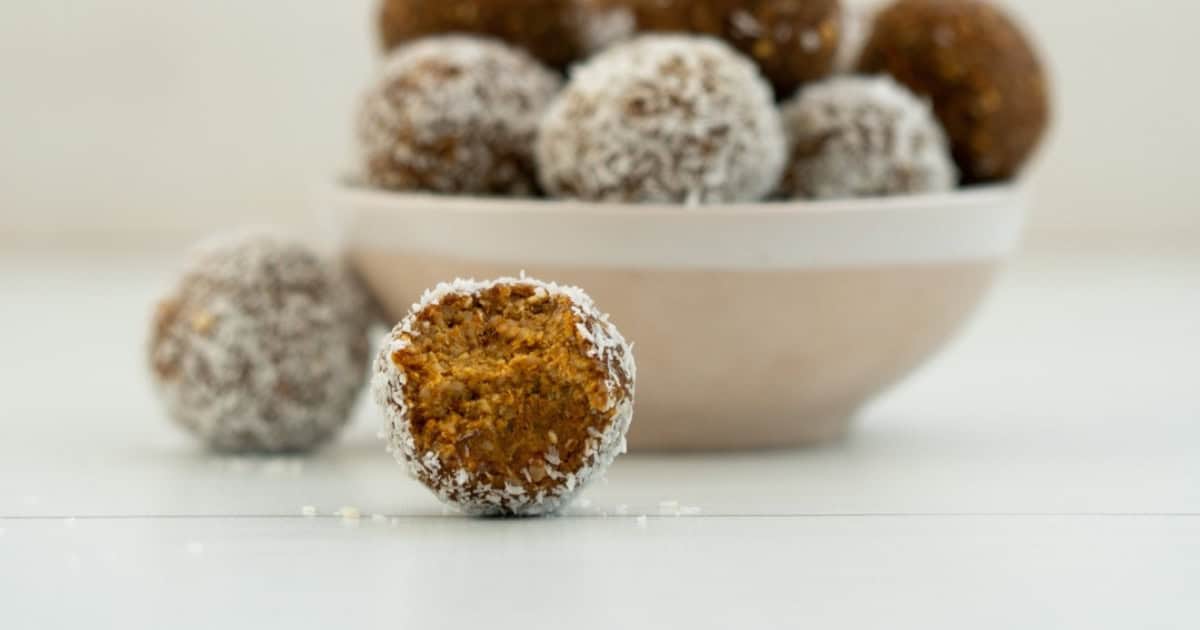
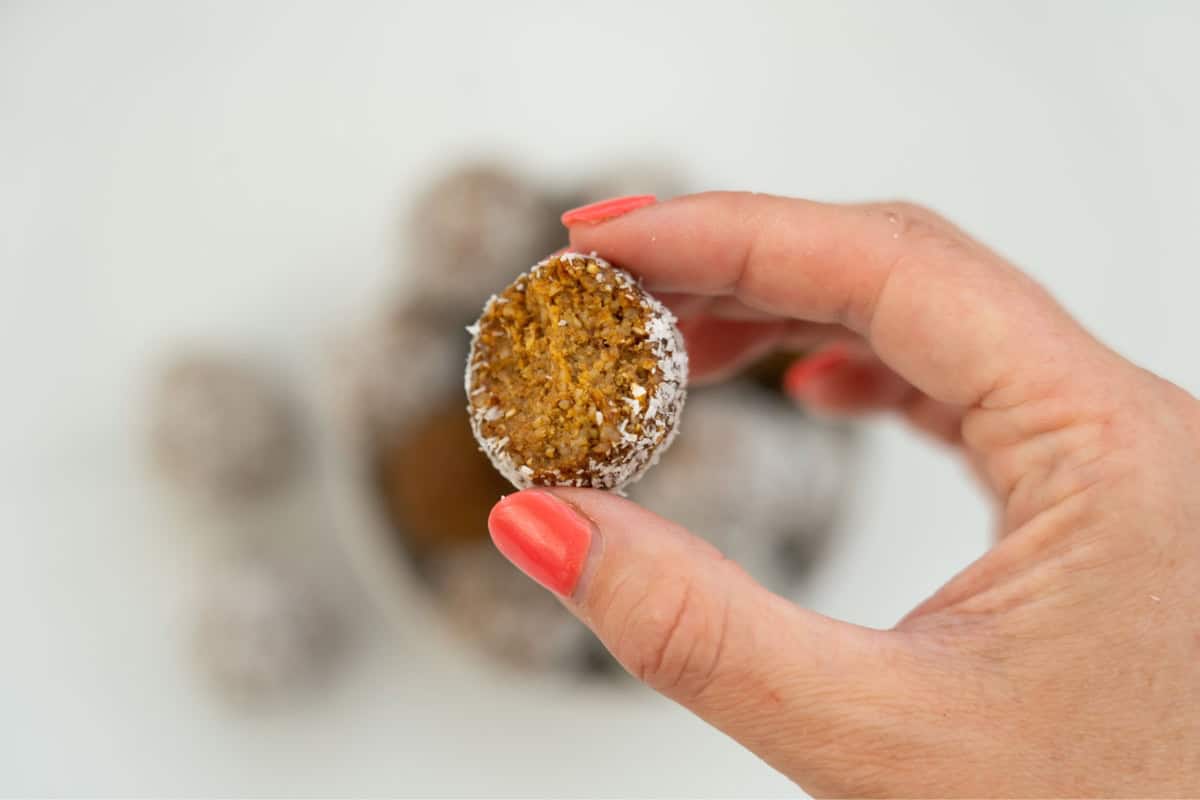
Step four: Scoop out teaspoonfuls and roll into balls. The mix is sticky because of the water in the fresh carrot, so keep your hands damp and it won't cling to your fingers. Roll the balls in desiccated coconut, which makes them much easier to handle. I sometimes leave a few plain.
Step five: Chill!
Save This Recipe!
Top Tips
Here is how you can make these bliss balls perfectly every time!
- Use a sturdy food processor. A small blender will struggle, especially with regular dates.
- Blitz the carrot first and finely. Big pieces of carrot make balls that fall apart.
- Keep your hands damp while rolling. It's the easiest fix for sticky mixture, and a great job for the kids.
- Chill before packing. They hold their shape much better in a lunchbox once they've firmed up in the fridge.
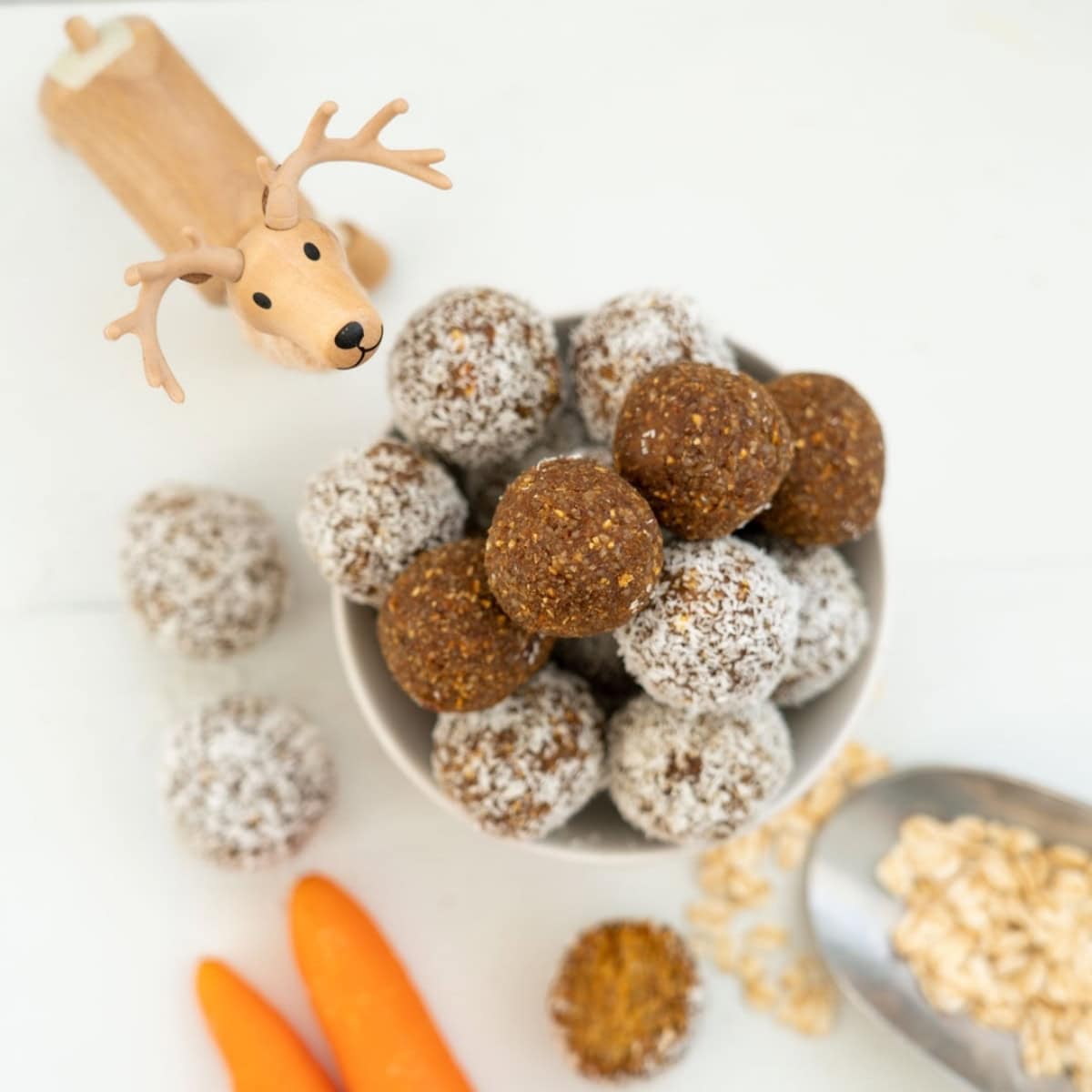
- Call Them Reindeer Food - If you call them reindeer food then they are the perfect little kid snack at Christmas time!
Storage, Freezing & Making Ahead
Fridge: Keep in an airtight container for up to 5 days. Because they contain fresh carrot, they don't keep as long as bliss balls made only from dried fruit.
Freezer: Freeze in a container or zip-lock bag for up to 3 months. Take them straight from the freezer into the lunchbox and they'll be thawed by morning tea.
Lunchboxes: They soften at room temperature, so pack them with an ice pack on warm days.
Make-ahead: Make a double batch on the weekend and freeze half for later in the term.
Serving To Babies and Toddlers
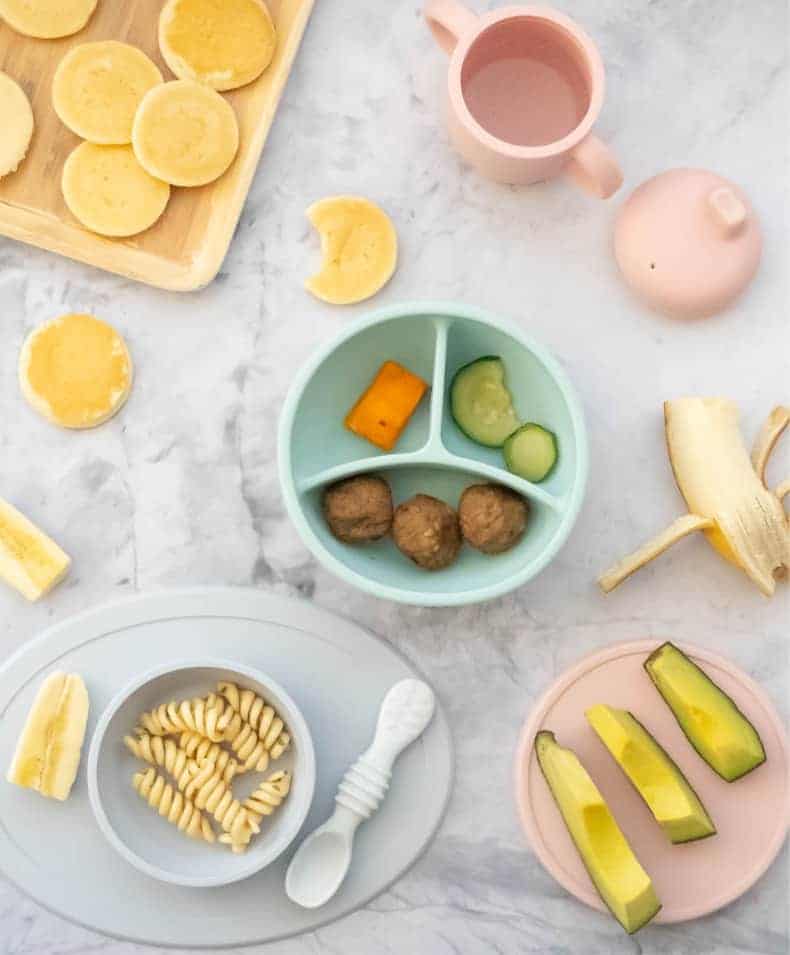
Shape: Small, round, sticky foods are a choking risk for young children making these unsuitable for babies. For toddlers, flatten the mixture into thin discs or a short log instead of balls, or squash each ball flat before serving. Always serve with your child sitting down and supervised.
Coating: Skip the desiccated coconut for the very young. It's dry and can cause gagging.
Sugar and salt: There's no added sugar or salt. The sweetness comes from the dates and carrot, so these fit fine into a toddler's snacks.
Carrot Cake Energy Bites
RATE THIS RECIPE
Save This Recipe!
Ingredients
- 3 carrots medium sized, peeled
- 1 cup oats
- 1 cup sunflower seeds
- ½ cup dates
- 1 Tablespoon coconut oil or other light flavoured oil
- 1 teaspoon cinnamon
- ½ teaspoon ginger dried
- Desiccated coconut for rolling
Instructions
- Watch the quick recipe video before you get started, scroll up a little to find it
- Check the notes at the bottom of the recipe for little bits of extra info and help
- Place carrots in a sturdy food processor and blitz until very finely chopped
- Add remaining ingredients, excluding the desiccated coconut and blitz until the mixture comes together into a large ball. This may take some time, 5 or so minutes of blitzing but be patient it will get there
- Using a teaspoon form balls, the mixture will be quite sticky (because of the water content of the fresh carrot) , but the texture improves once you roll in coconut. If yu keep your hands damp it stops the mix sticking to your fingers, Get the kids involved they will love the mess
- Roll the balls in desiccated coconut (You don't have to, I sometimes leave some coconut free)
- Refrigerate
Notes
Ingredient swaps
- Carrots: Swap for soft baked pumpkin or k?mara/sweet potato
- Dates: Medjool or regular both work. Soak firm regular dates in hot water for 10 minutes and drain if your food processor isn’t very sturdy. Raisins or sultanas also work.
- Sunflower seeds: Swap for pumpkin seeds (these change the colour) or cashews or almonds (then they’re no longer nut-free).
- Rolled oats: Swap for quinoa or rice flakes. These are wheat-free but not gluten-free as written. Oats can’t be labelled gluten-free in NZ, so use quinoa or rice flakes for coeliac families.
- Coconut oil: It firms up in the fridge and helps the balls hold together. You can use another mild flavoured oil or melted butter if you prefer.
Tips
- Use a sturdy food processor, and blitz the carrot finely first.
- Keep your hands damp while rolling to stop the mix sticking.
- Chill before packing so they hold their shape.
- At Christmas, call them reindeer food!
Storage
- Fridge: Up to 5 days in an airtight container.
- Freezer: Up to 3 months. Pack them straight from frozen and they’ll be thawed by morning tea.
- Lunchboxes: Add an ice pack on warm days.
- Make-ahead: Make a double batch and freeze half.
Toddlers
- Not suitable for babies, because small, round, sticky foods are a choking risk.
- For toddlers, you can change up the shape, flatten into thin discs or a short log, and skip the coconut coating.
- No added sugar or salt.
- Always serve seated and supervised.
Great idea using a veggie to keep the sugar down. Fabulous!
Can I use something other than coconut oil? Its just this isn't an ingredient I typically have in the pantry 🙂
Absolutely, any mild tasting oil will be fine. Virgin olive oil would be too strong in flavour though.
HI, how long will these keep in the fridge for? Thanks
3 days, you can freeze them if you want them to last longer
Is it roasted or raw sunflower seeds when listed in your recipes such as this one?
Thanks!
I use raw
Sort of a dumb question but by dried ginger do you mean a ground ginger spice? I'm not sure what to use.
Yes dried ground ginger. Sorry I was just trying to differentiate from it not being fresh root ginger. Not a dumb question at all I should be more specific
Can you use dried apricots instead of the dates ?
Thanks for the recipe! Unfortunately my toddler has a rare sunflower seed allergy, so do you think that almonds or hazelnuts could be used in place of them?
Yes, I know cashews and almonds both work
So wish I had a food processor!!!
I use mine A LOT.
What could I use instead of coconut? I like the oil but not the dried flakes.
The coconut is only to dust the balls at the end, the recipe will work without it, or for extra decadence a dusting of cocoa would work.
I loved them. My toddler loved them. My husband LOOOOOOVED them.
Yay!! sounds like a win at your house!
These were great to make with a lively toddler. He was eating the mixture by the fistful from the bowl! Great to keep in the fridge and freezer as an energy booster.
My baby eats them happily eats them. They freeze and thaw well. Great to batch make.
I made these and my toddler loves them! I didn't add the ginger because I didn't have any, and I also subbed the Sunflower Seeds for half cup of cashews and half cup of LSA because I found the weevles got into my sunflower seeds. ? Still turned out amazing.
A very forgiving recipe for people who dont have it all together. ??
Hello, thank you for sharing your recipes. Can I please ask what can be used instead of sunflower seeds as this isn't something we tend to have on hand? Thank you
Any nut or seed, cashews, almonds, pumpkin seeds