
Gluten Free Playdough

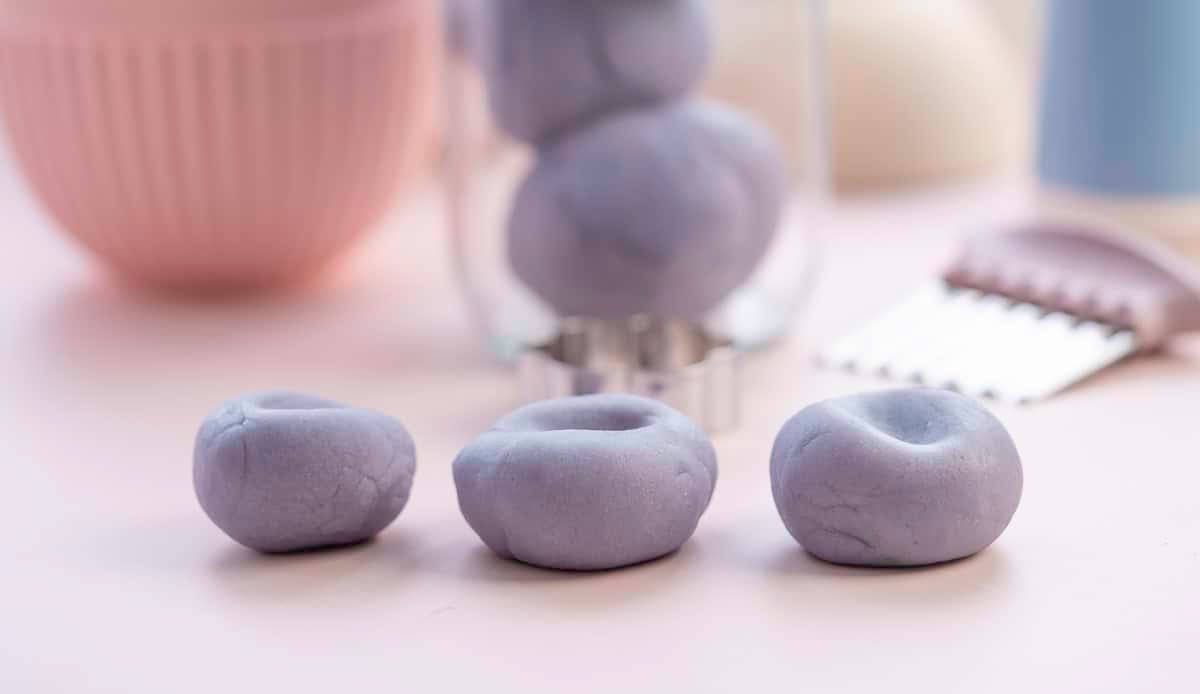
This gluten free playdough recipe is a lovely homemade alternative to traditional wheat-based playdough. Made with rice flour and cornflour (cornstarch), it creates a soft, squishy dough that's perfect for rolling, shaping and creative play.
If you have a child with coeliac disease or someone in your family who needs to avoid gluten, you'll know that gluten can turn up in some surprising places, including playdough!
Traditional homemade playdough is usually made with wheat flour, which contains gluten. The good news is that it's possible to make your own gluten-free version using a few simple ingredients.
Why This Recipe
- Gluten free: Made without wheat flour, using gluten-free rice flour and cornflour.
- Soft and squishy: Designed to create a pliable dough that's fun for little hands to work with.
- Simple ingredients: Made using ingredients you can find at most supermarkets.
- Colourful and creative: Add your favourite food colouring to make different shades.
- Great for home or kindy: A homemade alternative when gluten-containing playdough isn't suitable.
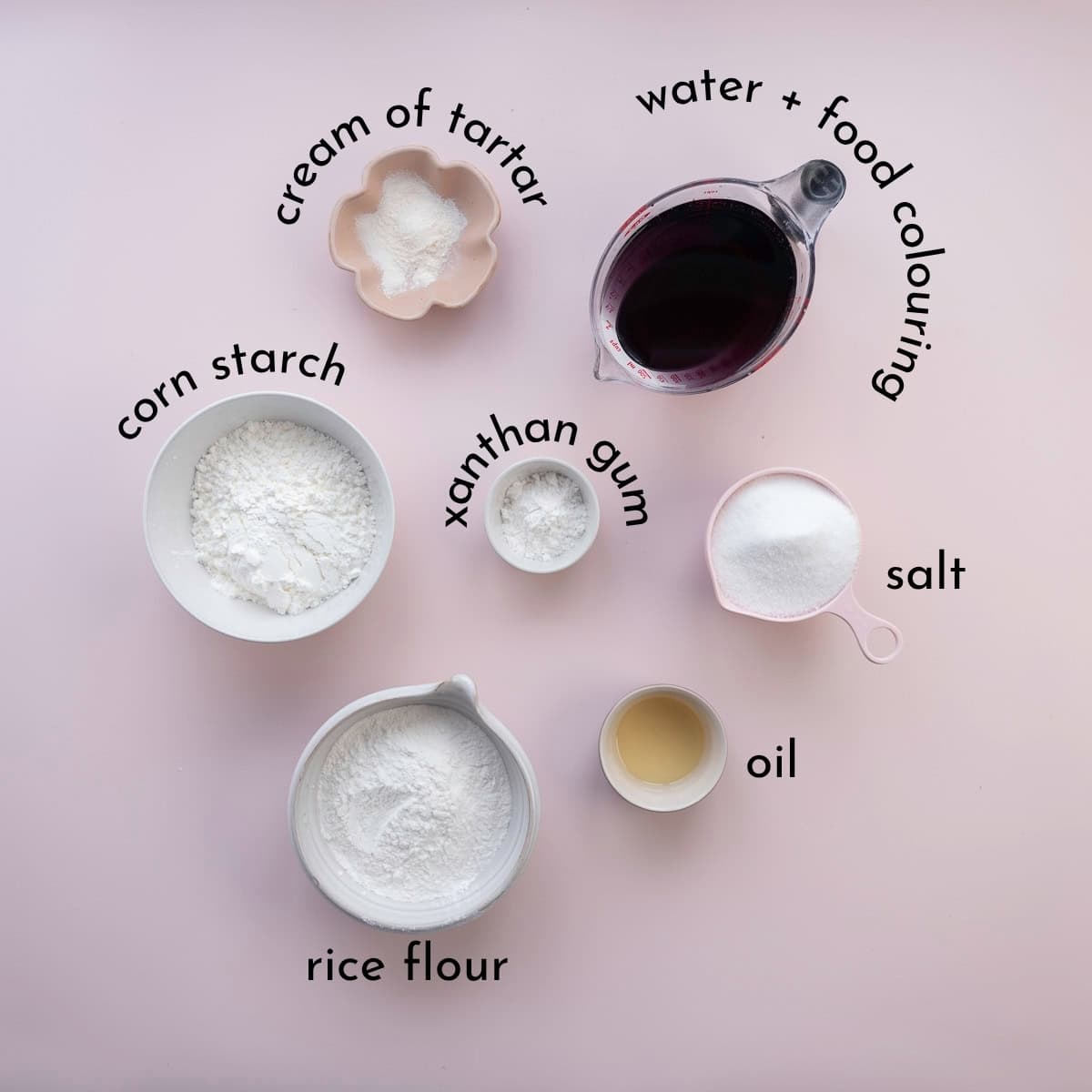
Ingredients You Will Need
Ingredient Notes, Substitutes, & Allergy Swaps
- Rice flour: Use plain rice flour, checking that it is labelled gluten free. Rice flour behaves differently from wheat flour, so I wouldn't recommend swapping it for a different flour without testing.
- Cornflour: In New Zealand and Australia, cornflour is the name commonly used for cornstarch. In the United States, look for cornstarch. Check the label carefully, as not all products sold as cornflour are necessarily gluten free.
- Cream of tartar: This helps improve the texture of the playdough. I recommend including it for the best results.
- Xanthan gum: Helps bind the gluten-free flours together, giving the playdough a smoother, more stretchy and pliable texture. As gluten-free flours don't have the elasticity that gluten provides, a little xanthan gum can help stop the playdough from becoming crumbly and make it easier for little hands to roll, squish and shape
- Food colouring: Choose a food colouring that is suitable for a gluten-free diet, particularly if making this playdough for a child with coeliac disease.
How to Make Gluten Free Playdough Illustrated Step By Step Guide
Unlike my regular homemade playdough recipe, this gluten-free version is made on the stovetop. Cooking helps the ingredients come together into a soft, workable dough
Below are illustrated step-by-step instructions to make my gluten-free recipe, if you prefer just the written instructions then head straight to the printable recipe card below.
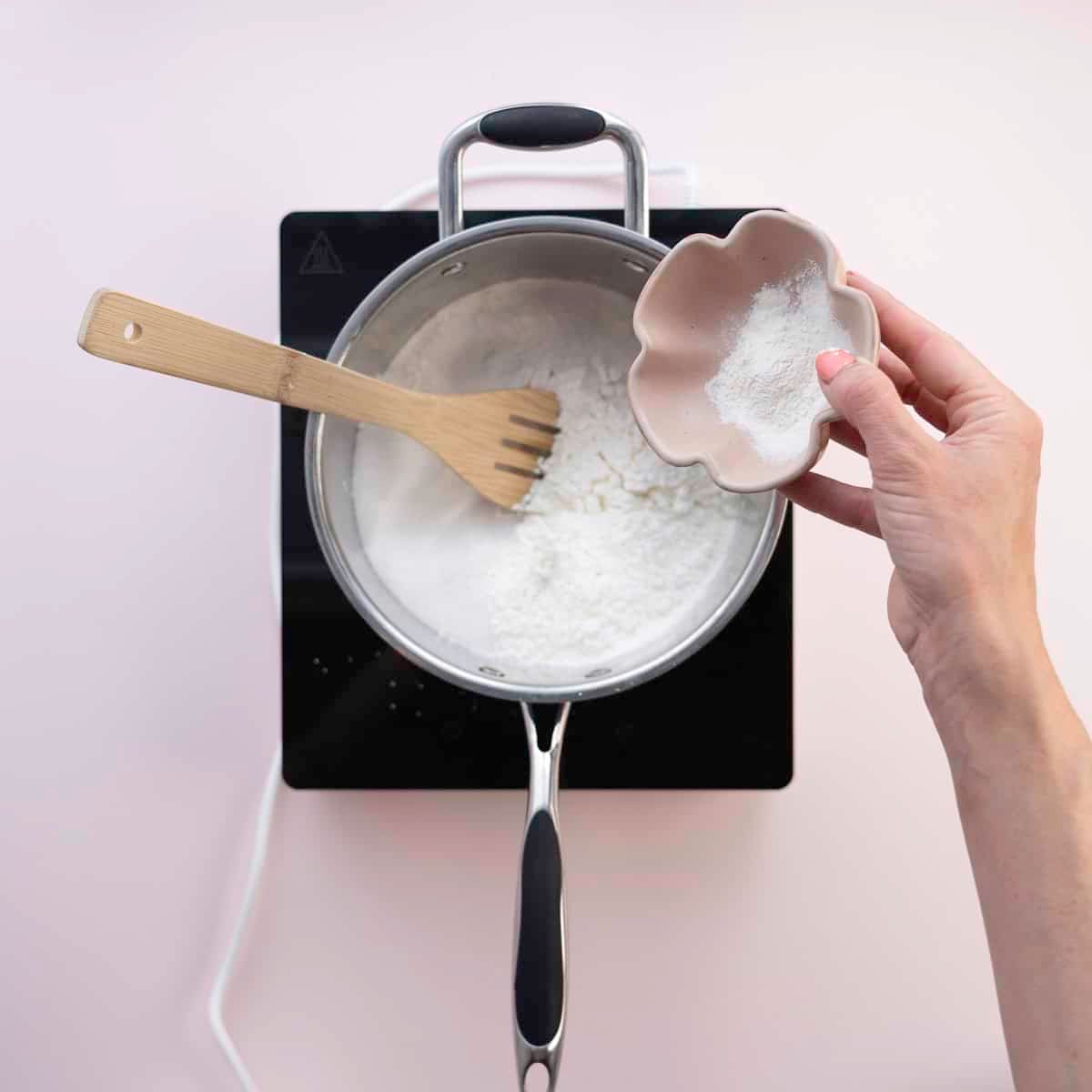
Step one: In a medium saucepan, combine the rice flour, cornflour, salt, xanthan gum and cream of tartar.
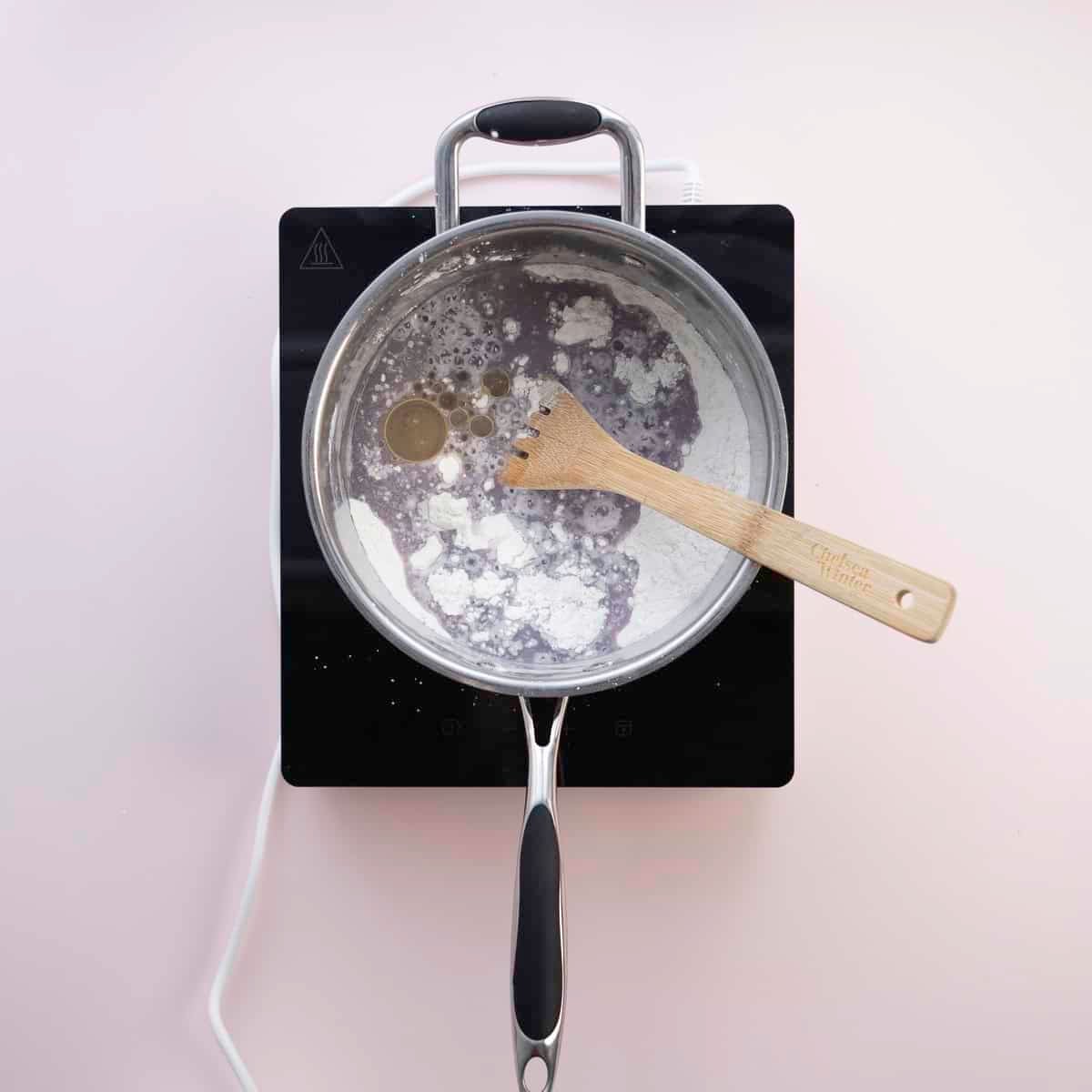
Step two: Add the water, vegetable oil and food colouring. Stir until the ingredients are well combined and there are no large lumps. Don't worry about small lumps, the dough will end up smooth.
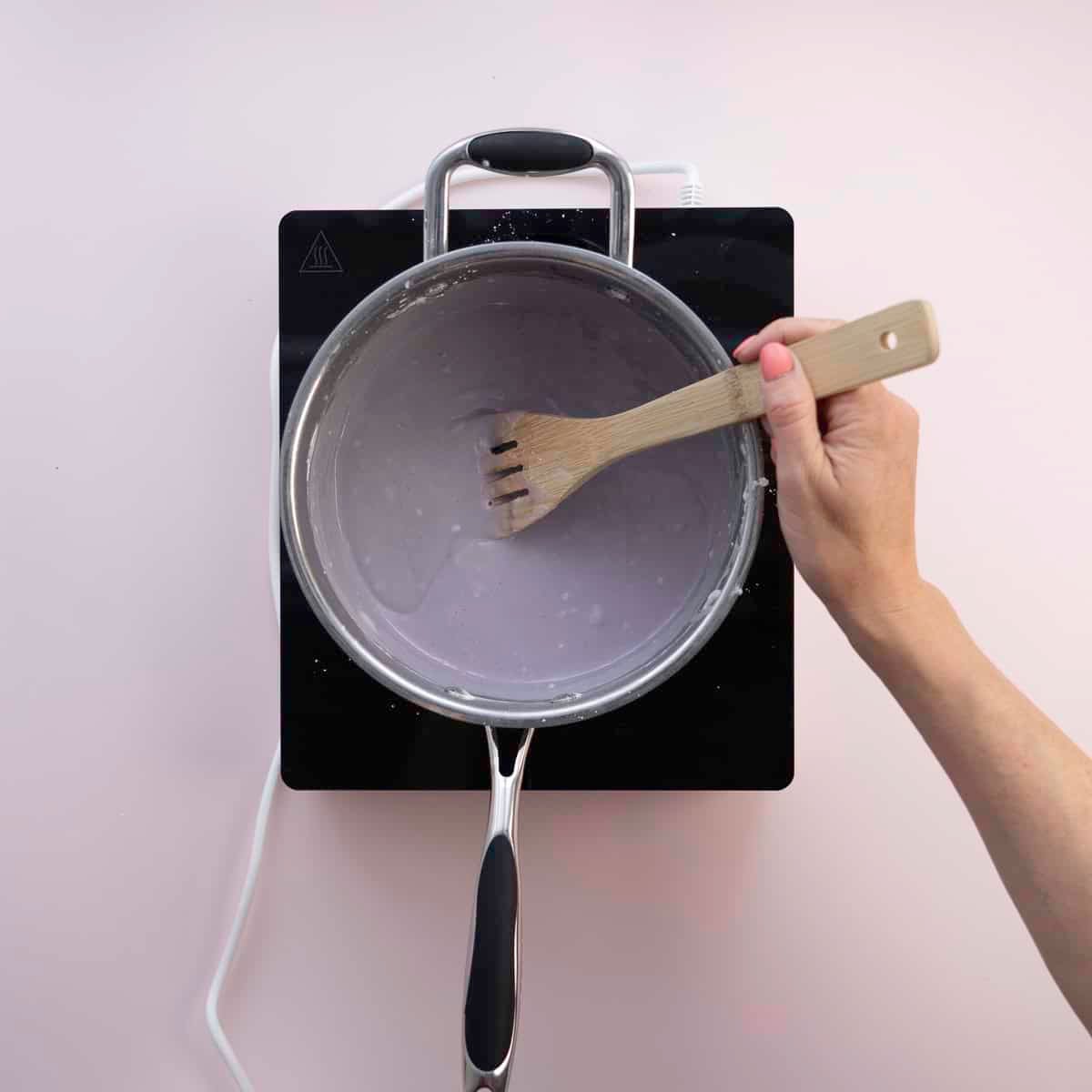
Step three: Place the saucepan over a low to medium heat. Stir continuously as the mixture thickens. It will be quite sticky, gluey and glumpy!
Save This Recipe!
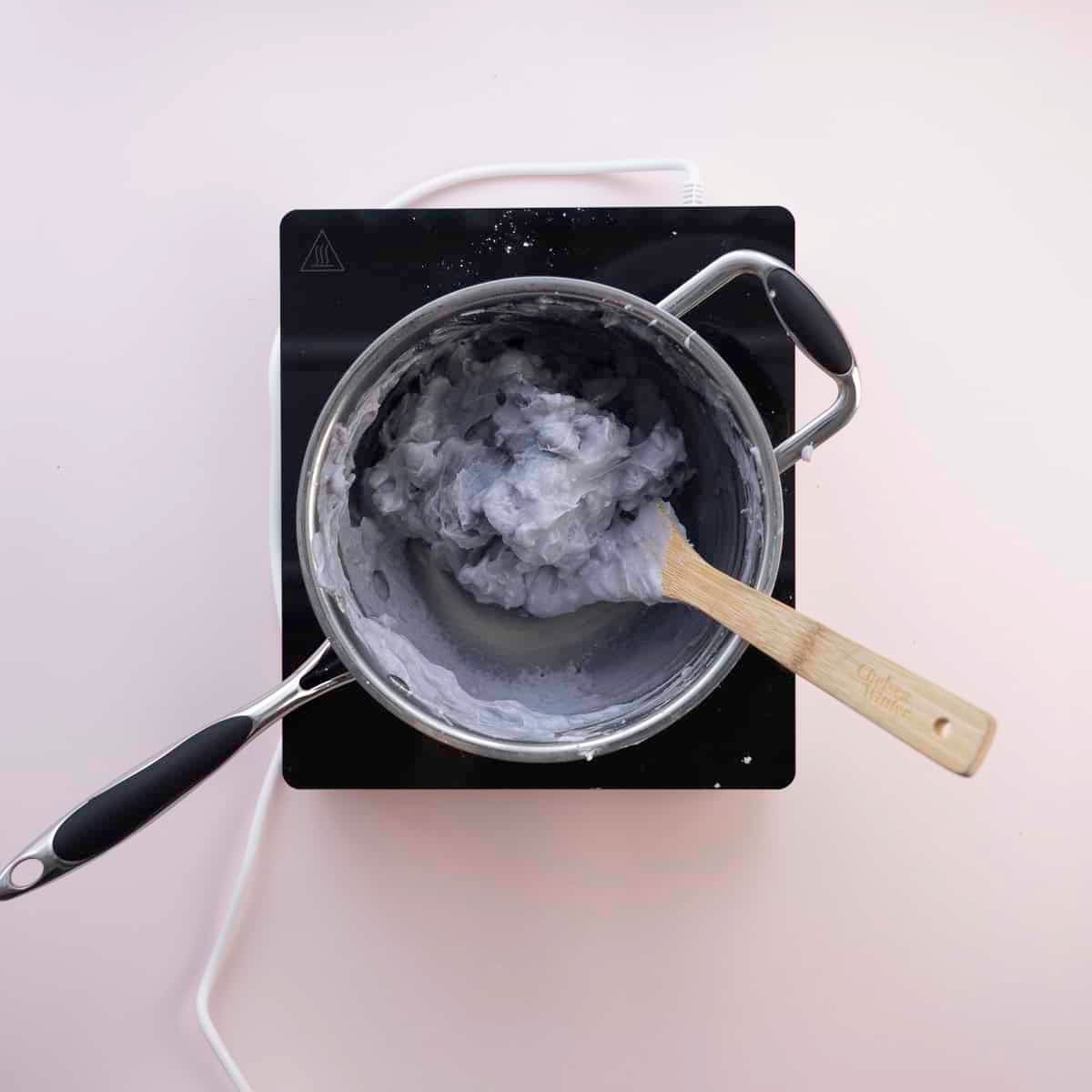
Step four: Continue stirring until the mixture comes together into a ball of dough and begins pulling away from the sides of the saucepan.
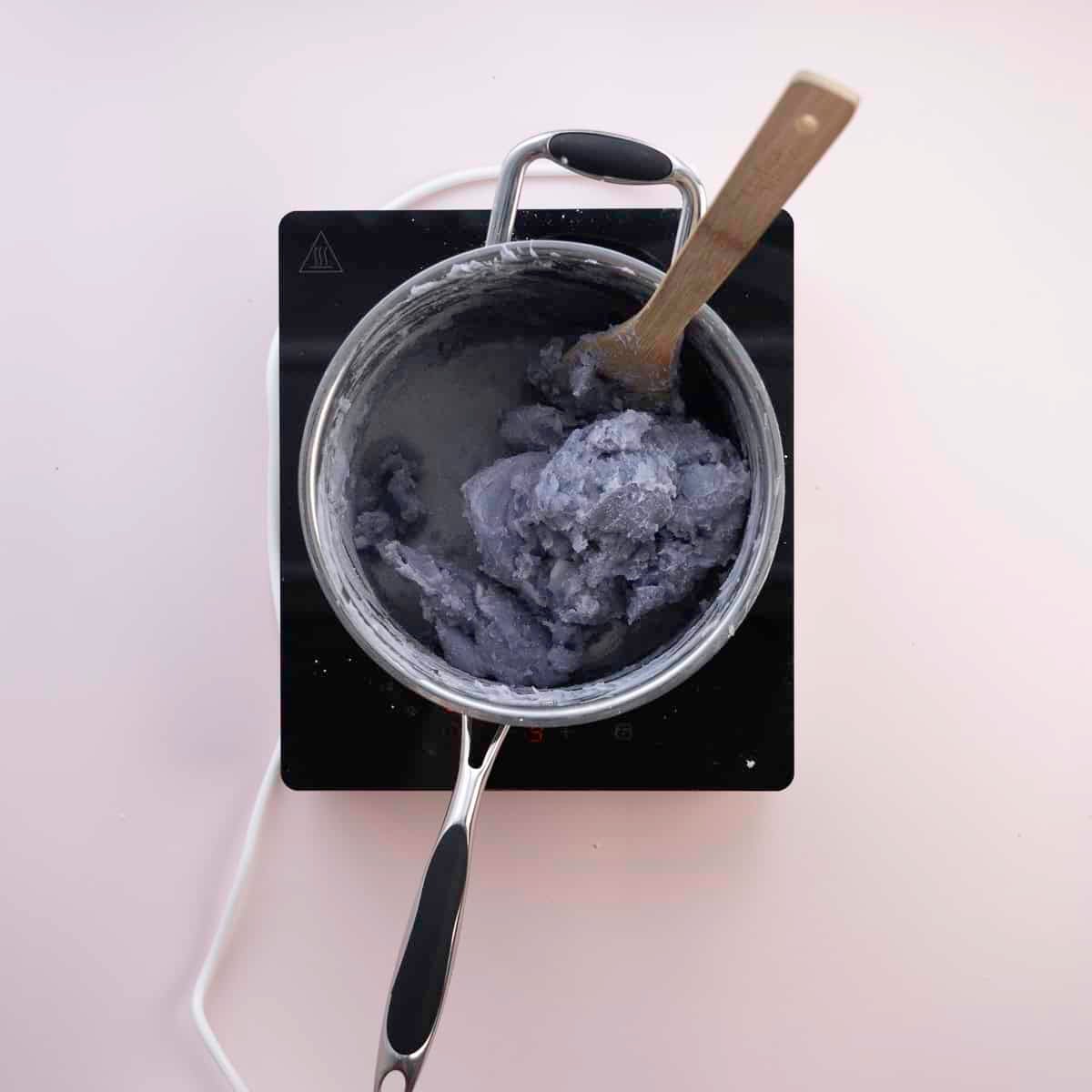
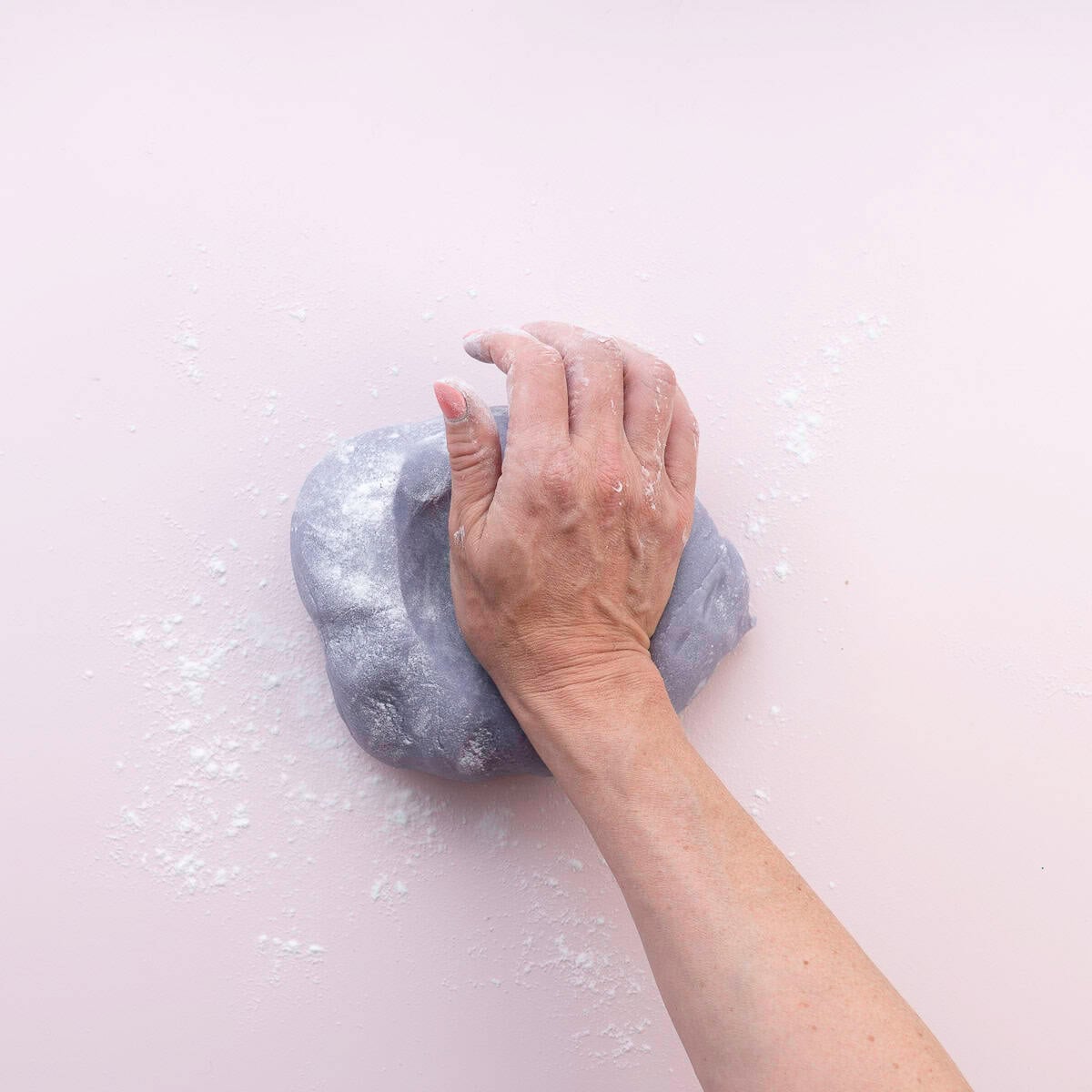
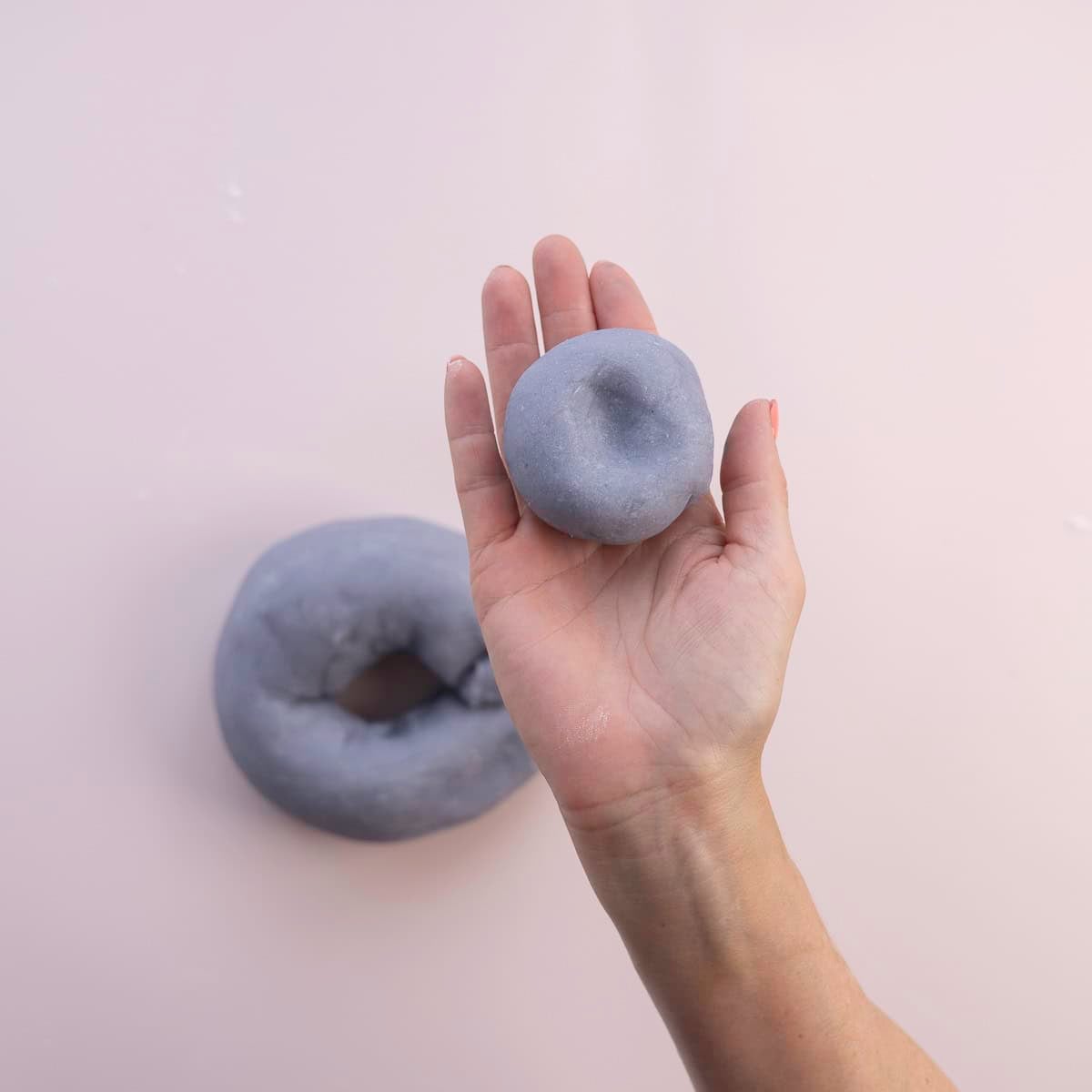
Step five: Remove from the heat and allow the dough to cool until it is safe to handle. Knead until smooth and pliable. I use rice flour on my counter top and on my hands as the dough can be quite sticky when it's warm. I keep kneading and flouring until the dough has cooled and has a good playdough texture!
Put water in the saucepan asap to make clean up easier!
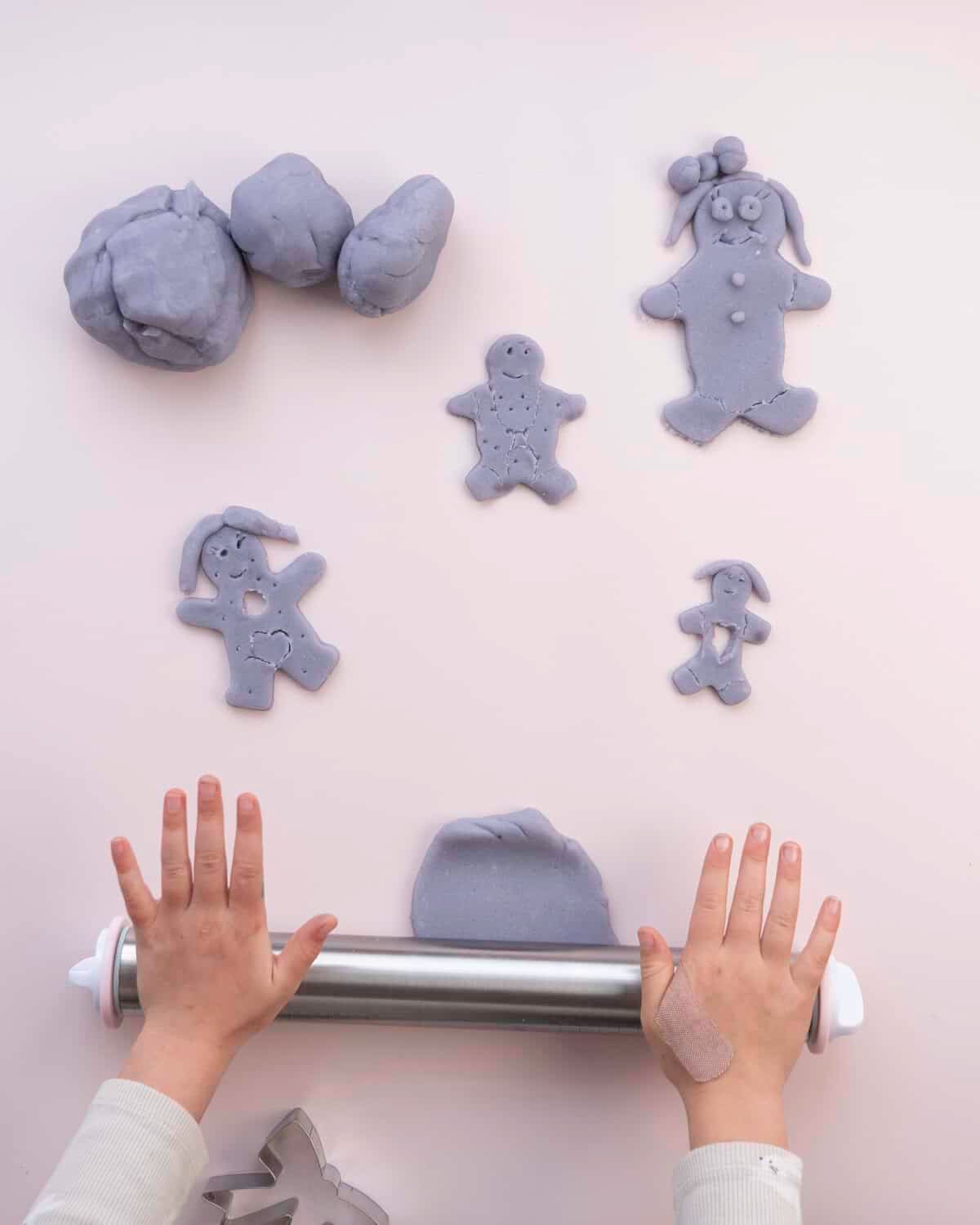
Your homemade gluten-free playdough is ready for some creative play!
Top Tips
Here is how you can make gluten-free playdough perfectly every time!
Why Is My Gluten Free Playdough Sticky?
Gluten-free flours absorb water differently from wheat flour, so the consistency can take a little adjusting.
The dough will still sticky after cooking and cooling, keep kneading it for a little longer. If necessary, work in a small amount of rice flour until it reaches a consistency you are happy with.
What If My Playdough Is Crumbly?
If your playdough feels dry or breaks apart easily, try kneading in a few drops of water at a time.
Add the water gradually so you don't end up with a sticky dough.
How to Make Different Colours
For a single-colour batch, add food colouring to the water before cooking.
If you would like several colours, you can make the playdough without colouring, allow it to cool, then divide it into portions and knead different colours into each one.
Be aware that food colouring can stain hands, clothing and surfaces.
How to Store Gluten Free Playdough
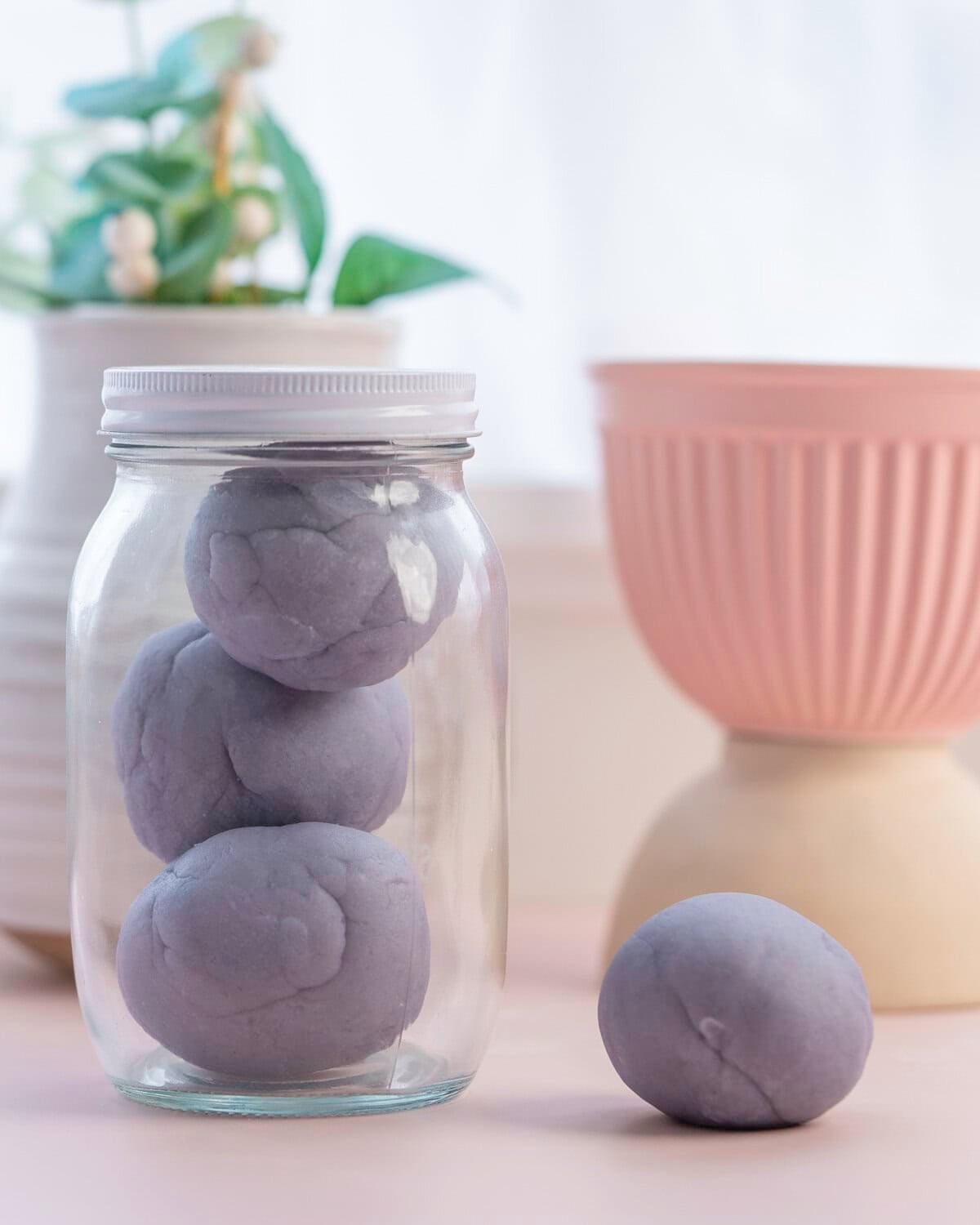
Store your homemade playdough in an airtight container, glass jar or sealed bag between play sessions.
Keep it somewhere cool and dry, and always check it before use.
If the playdough develops an unusual smell, visible mould or changes in appearance, discard it.
Is Playdough Safe for Children With Coeliac Disease?
Traditional playdough is often made with wheat flour, which contains gluten.
For children with coeliac disease, the main concern isn't gluten being absorbed through their skin. Gluten needs to be swallowed to cause the intestinal immune reaction associated with coeliac disease.
However, young children frequently put their hands and toys in their mouths, and playdough can easily transfer onto fingers, tables and other surfaces.
Making your own gluten-free playdough can be a practical way to help children with coeliac disease enjoy this popular activity.
A few things to keep in mind:
Check that all ingredients are gluten free, including the flours and food colouring.
Use clean utensils, bowls and play surfaces to avoid cross-contact with gluten.
Keep gluten-free playdough separate from regular wheat-based playdough.
Encourage handwashing after playing and before eating.
If making playdough for a classroom or kindy, check that any shared tools are clean and free from wheat-based playdough residue.
Gluten Free Playdough
RATE THIS RECIPE
Save This Recipe!
Ingredients
- 1 cup gluten-free cornflour cornstarch
- 1 cup gluten-free rice flour
- 1 cup fine table salt
- 4 teaspoons cream of tartar
- 1 teaspoon xanthan gum
- 2 cups water
- 2 teaspoons vegetable oil
- Gluten-free food colouring optional
Instructions
- Add the cornflour, rice flour, salt, xanthan gum and cream of tartar to a medium saucepan.
- Pour in the water, vegetable oil and food colouring. Stir until well combined.
- Cook over low to medium heat, stirring continuously, until the mixture thickens and forms a ball.
- Remove from the heat and allow to cool until safe to handle.
- Knead while the dough is still warm, until smooth and pliable. I use rice flour on my counter top and on my hands as the dough can be quite sticky when it's warm. I keep kneading and flouring until the dough has cooled and has a good playdough texture!Put water in the saucepan asap to make clean up easier!
Notes
- Use ingredients verified as gluten free and clean utensils to avoid cross-contact.
- If the dough is sticky, knead in a little gluten-free cornflour or rice flour.
- If the dough is crumbly, add a few drops of water.
- Store in an airtight container between uses.
- This playdough is not edible. Supervise children during play.
Quick Start Guide To BLW
Baby led weaning doesn’t need to be complicated, grab my quick start guide to begin your little ones food journey.